CMSC 5713 IT Project Management - Lecture 02
Lecture 01 Project Management Framework
Project Management Framework
- Understand the organization.
- Involve the users.
- Manage the processes – PMBOK vs. PRINCE2
Understand the organization
- 项目不能孤立运行。
- 项目必须在广泛的组织环境中运作。
- 项目经理需要运用系统思维(system thinking):
- 全面了解项目并了解其与大型组织的关系。
- 高级经理必须确保项目继续支持当前的业务需求(business needs)
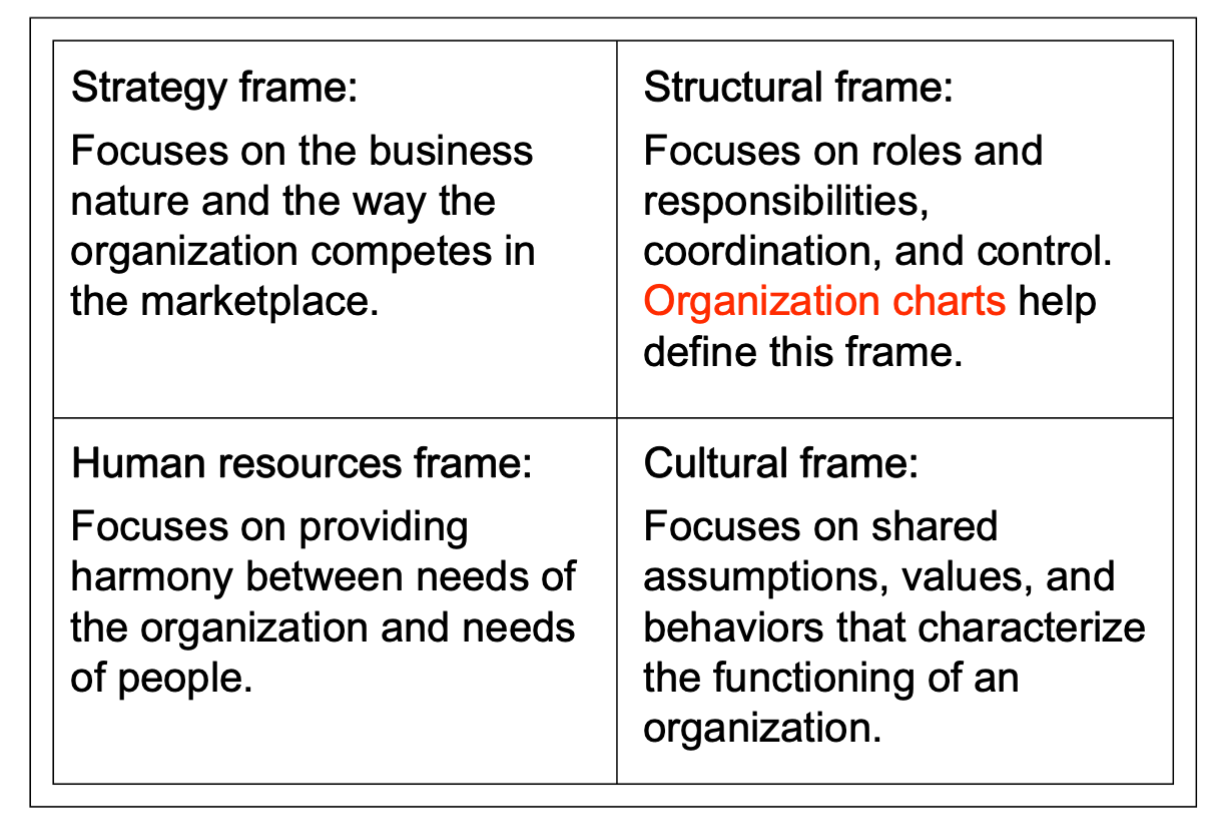
Strategy frame
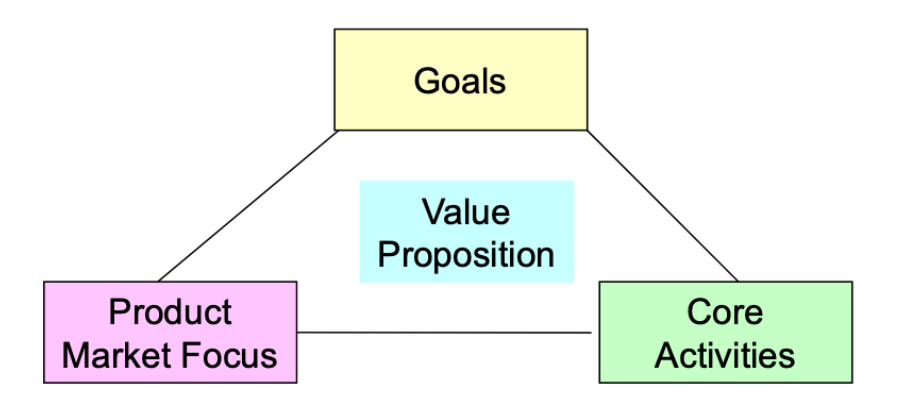
- Strategy 是旨在实现特定目标的长期行动计划
- Strategy 的组成
Strategy vs Tactics 战略与战术
“没有战术的战略是获得胜利的最慢途径。 没有策略的战术就是失败之前的喧嚣。” (中国军事家孙子)
- 战略定义了你的长期目标以及实现目标的计划。 战略为你提供了实现组织使命所需的途径。
- 战术要具体得多,而且通常会朝着较小的步骤和较短的时间范围发展。 它们涉及最佳做法,特定计划,资源等。它们也称为“倡议(initiatives)”
Organization structure
组织结构是正式的决策框架,工作任务通过该框架进行划分,分组和协调。
组织结构图显示组织结构并显示职务,职权范围以及部门之间的关系
三个基本的组织结构
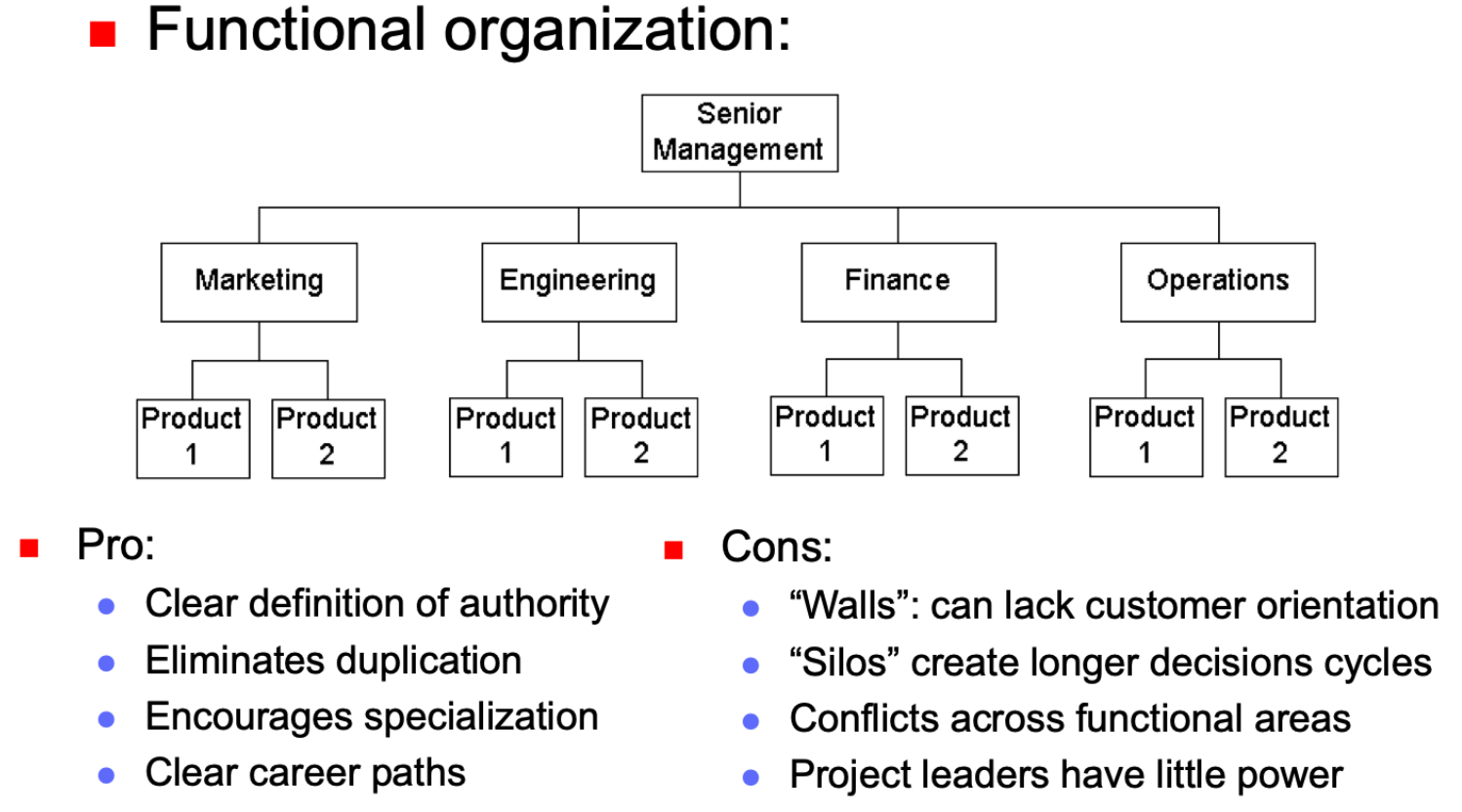
Functional 职能
将相似或相关的职业专业或过程归为财务,制造,营销等领域的熟悉标题。
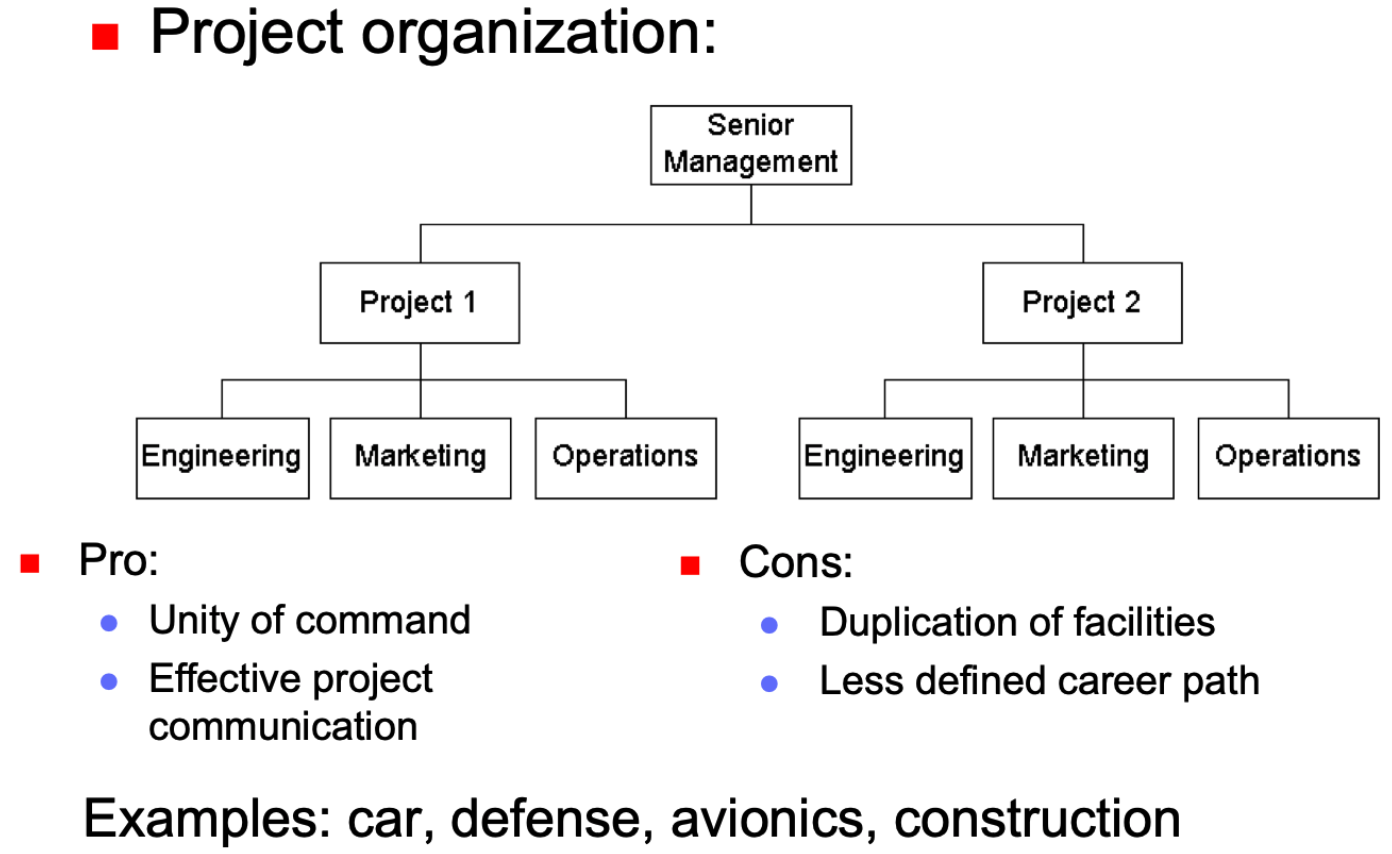
Project 项目 or Divisional 部门
由独立生产的战略业务部门组成,每个部门均生产单个产品 。
Matrix 矩阵
职能结构与项目结构之间的中间立场
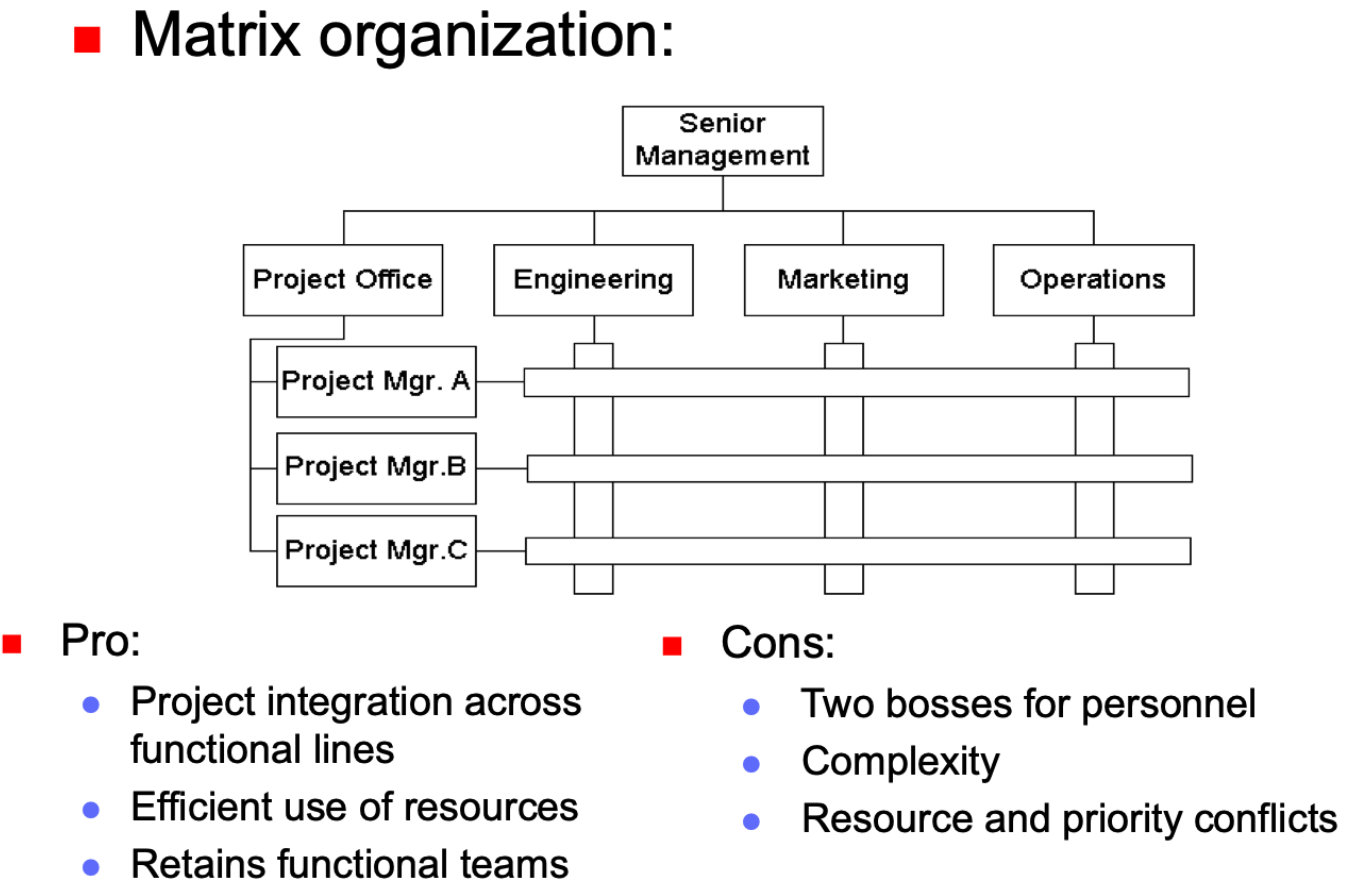
Origanization structure influences on projects
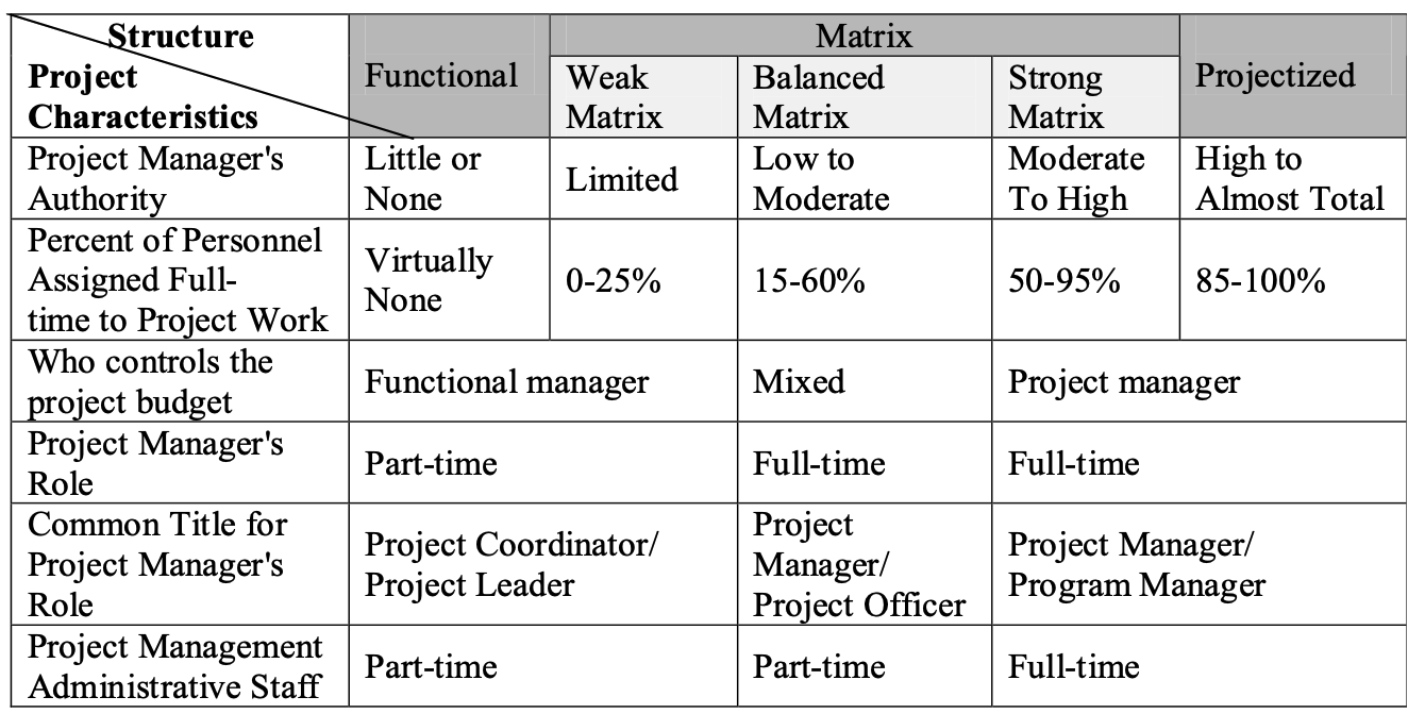
- 项目经理需要了解组织结构。
- 原因
- 组织结构会极大地影响他们的作用。
- 确定他们需要从哪些职能中获得哪些技能
Human Resources Frame
- 人力资源处理组织中管理人员的各个方面,其中包括:
- 选择
- 薪酬体系
- 培训和发展
- 绩效评估
- 公司轮换
- 项目经理需要知道他们在跟谁工作
- 有助于选择团队成员。
- 有助于了解如何激励他们的团队。
Q & A
Q: What does “walls : can lack customer orientation” means in P.13?
A: Means that due to lack of interaction between depts, engineering may simply develop the products without understanding the needs from marketing (who may have better understanding of the customers)
Q: What does “silos : create longer decisions cycles” means in P.13?
A: Means that decisions need to go through senior executive levels rather than simply at managerial levels (e.g. project manager level)
Q: Why project manager need to understand the organizational culture?
A: So they can make up what lackings in organization culture within the team, e.g. if the organization has no strong member identify, may be project manager can encourage team to be proud to be part of the team
Q: What does “means-ends orientation” means in P.22?
A: Means-end orientation describes how much an organization focuses on processes versus end results
Q: What does “open-systems focus” means in P.22?
A: Open-systems focus describes how aware and reactive your business is to changes outside
your corporate environment
Q: What is the difference between “development” and “implementation” in project lifecycle in P.31?
A: Development may include analysis, design and getting details of the concept, implementation including buidling and testing
Q: What does “exception” means in “manage by exception” in P.56?
A: manage by exception is making decision to fix things when it is not according to plan
Q: In “tailor to suit the project environment”, what does “project environment” means? any examples?
A: Project environment including the size, how the project fits into company strategy, the important of the project, the organization culture, etc.
Q: Does “largely descriptive” in P.61 means “not necessary strictly follow”? And “highly prescriptive” means “must strictly follow”?
A: Largely descriptive means at high level, e.g. you just need to take medicine to get better, highly prescriptive means at specific levels, e.g. you need to take this medicine 1 tablet 3 times a day. They both ask you to follow the best practice/advice.
Q: What does “directing a project” means in P.58?
A: Directing project means making overall decision about the project and exercising overall control. So, it is the duty of project board. While the day-to-day running of the project will be managed by PM.